In Eugene, Oregon, the Eugene Islamic Center located on 1856 W Broadway is the only mosque in the city. Founded on May 28, 2012, the mosque serves as a local gathering place for the Muslim community of Eugene.
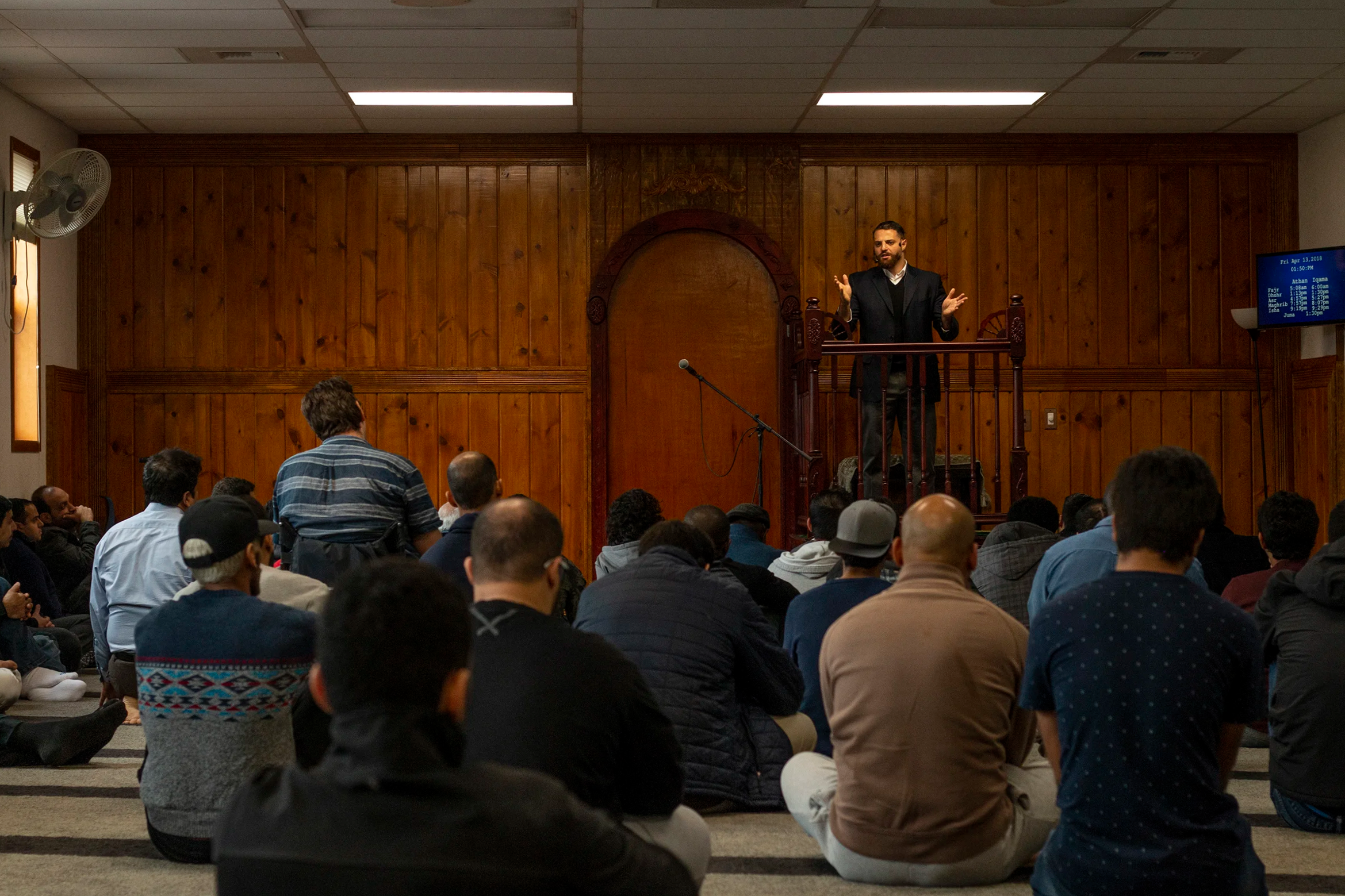
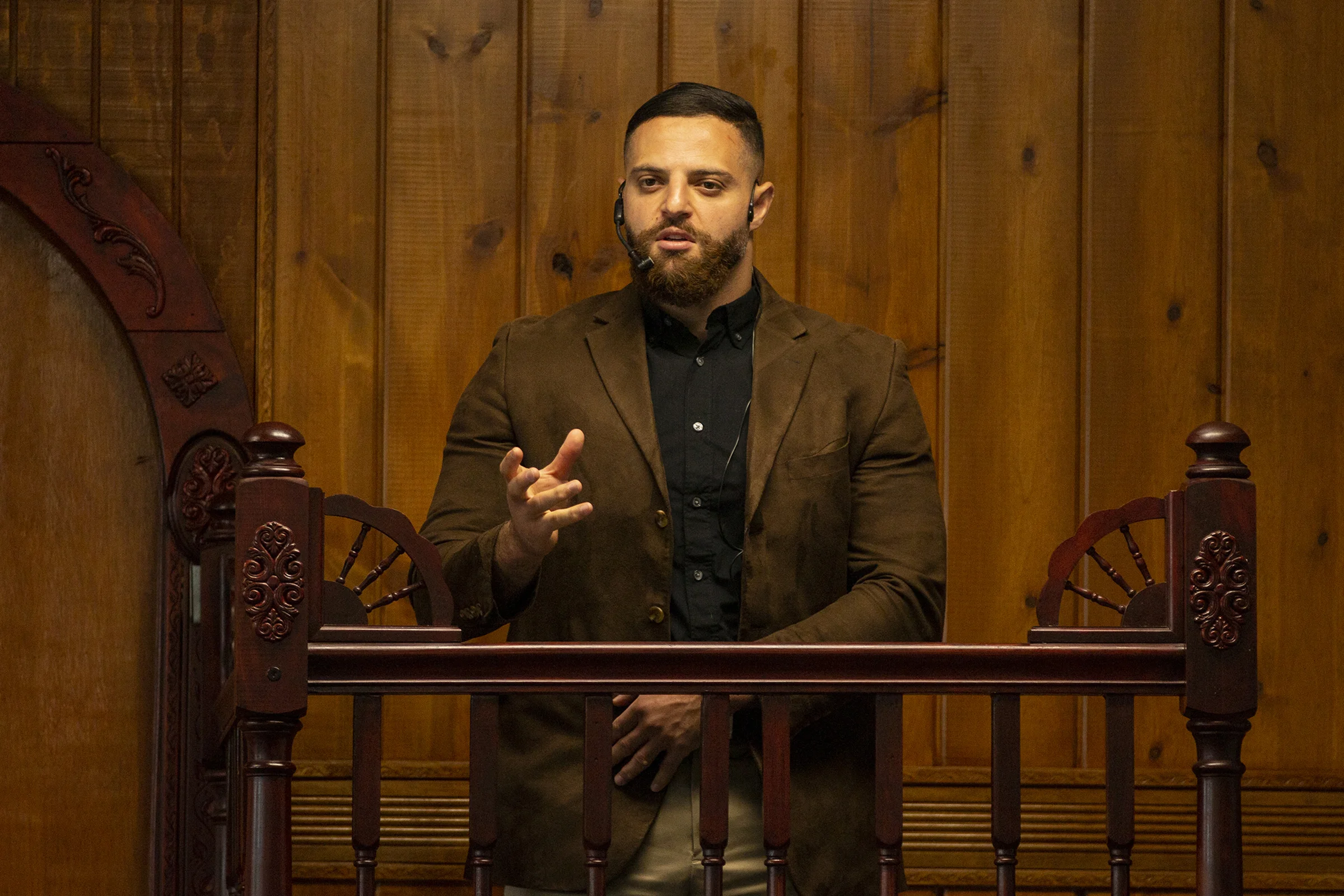
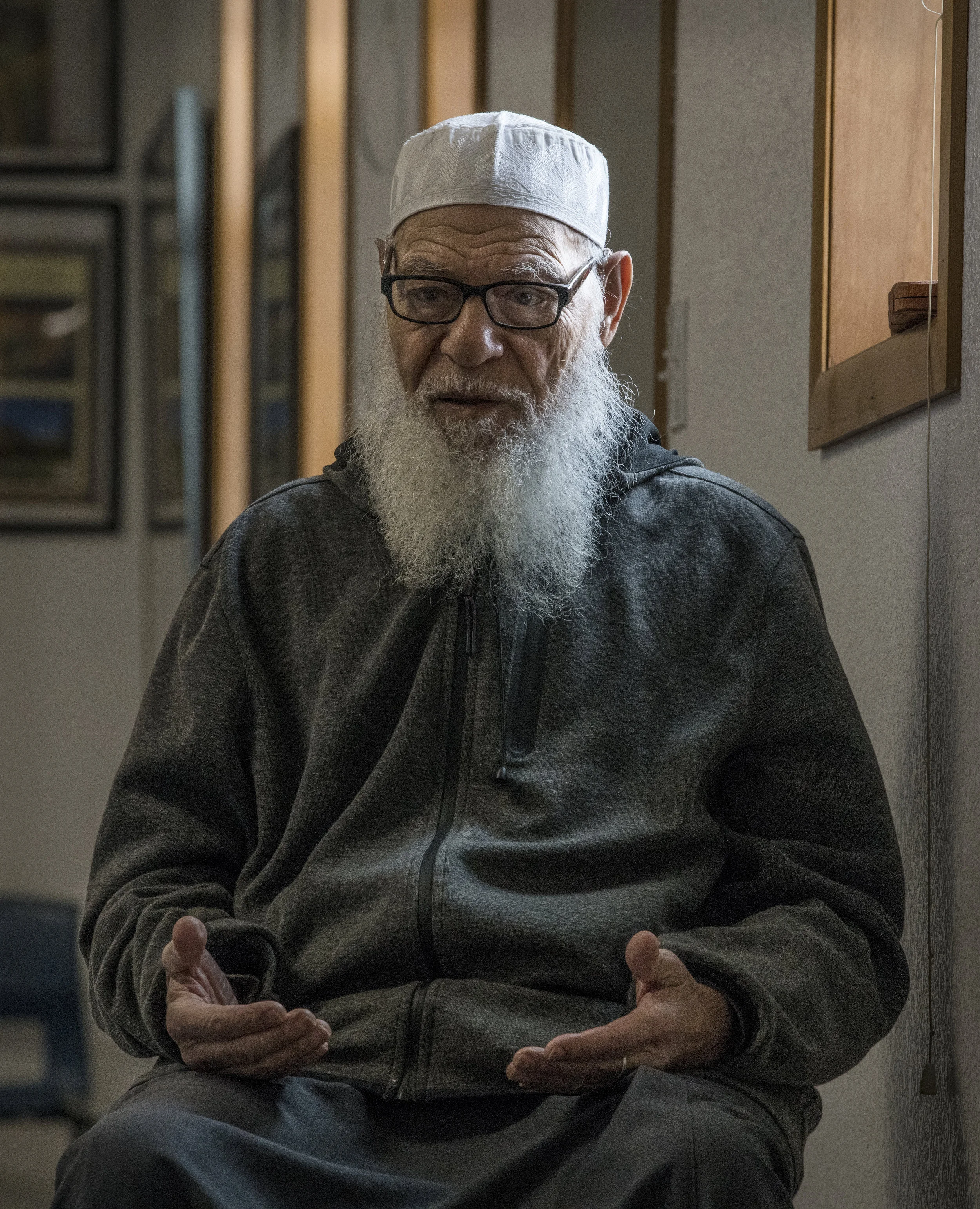
 Eugene Islamic Center Imam Yosof Wanly speaking to worshipers attending Friday prayer. In a mosque, the individual who leads payer, provides religious guidance and serves as a community leader is known as an imam.
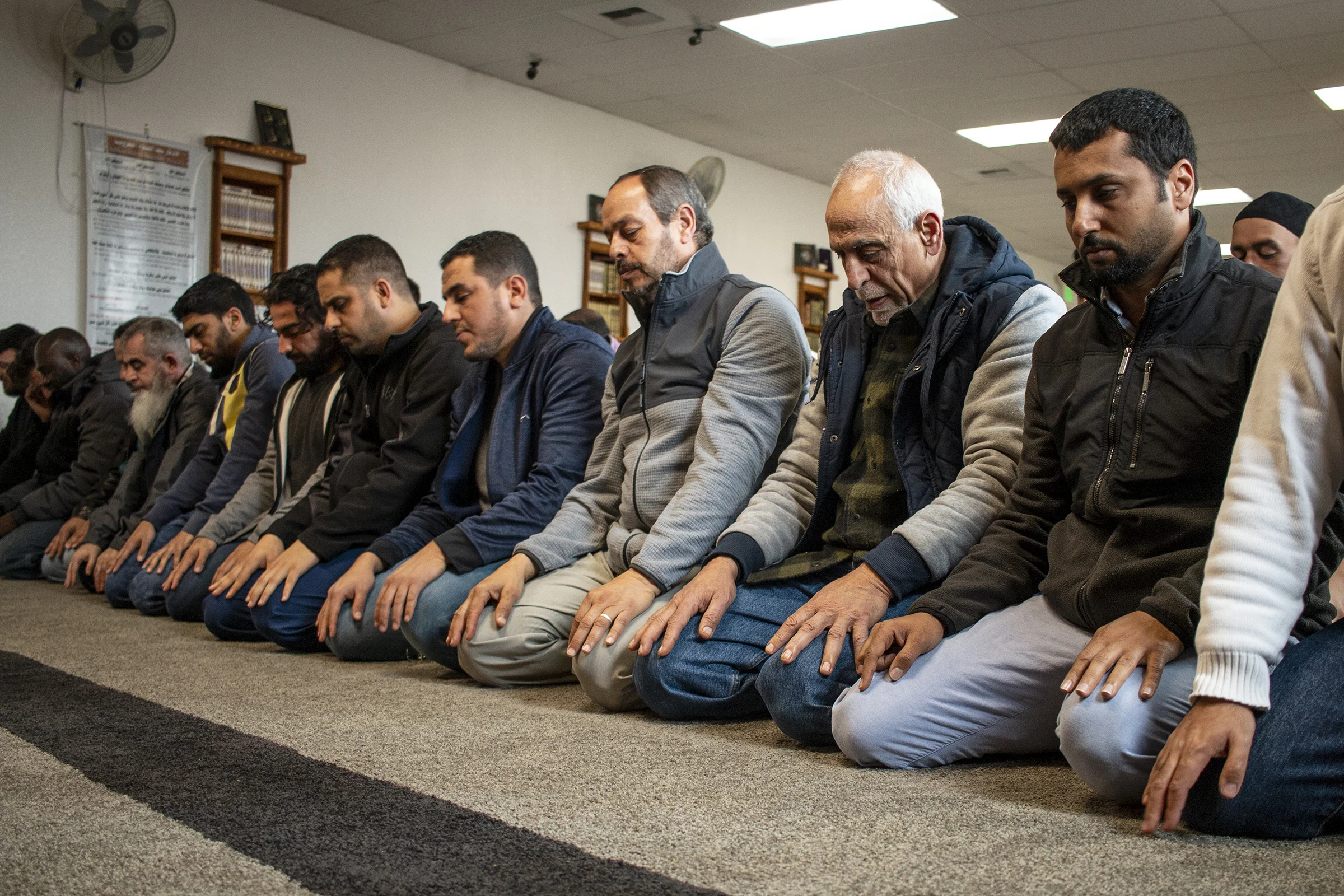
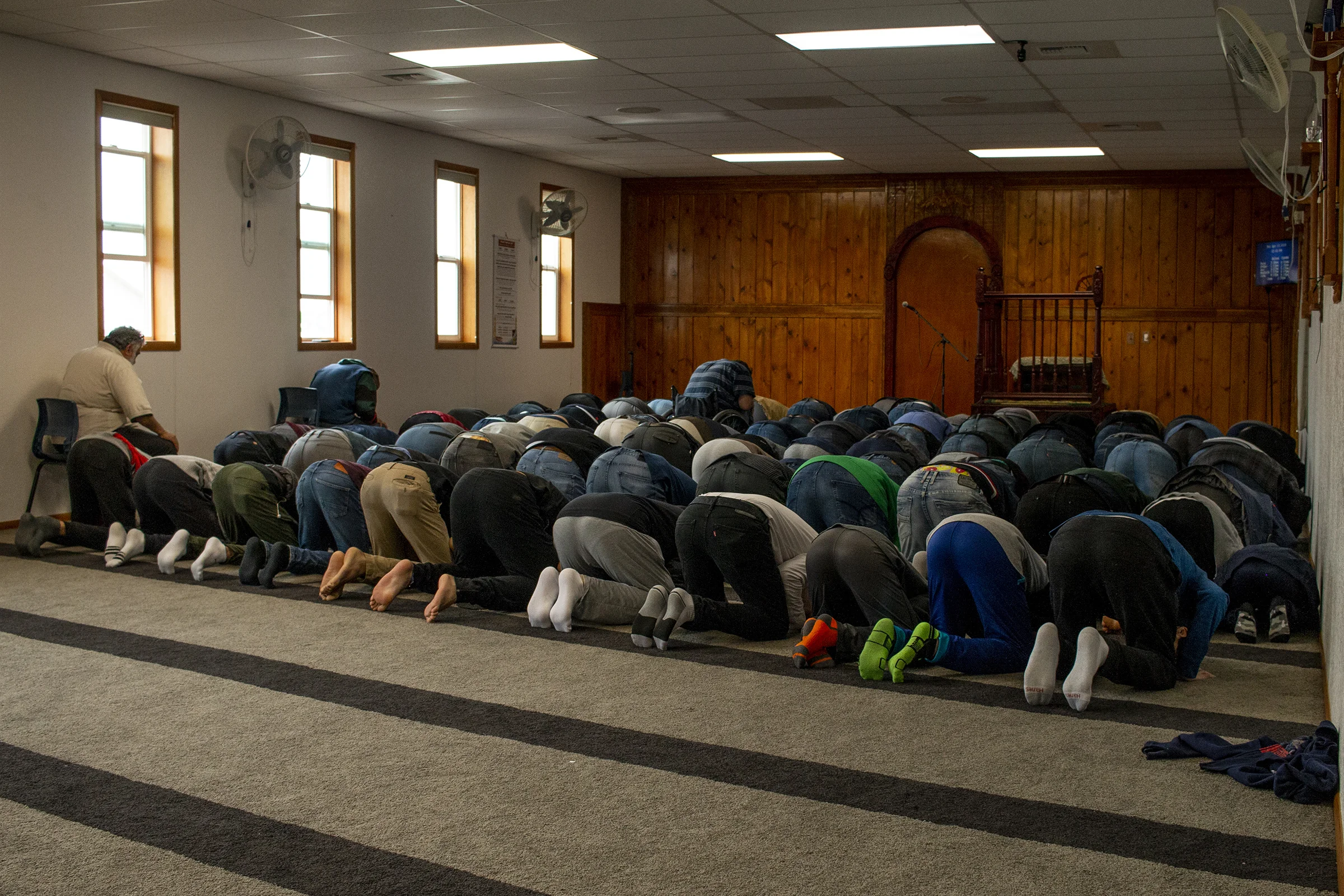
 Muslim worshipers pray during Salat al-Jummu’ah (Friday Prayer). Prayer is just one of the five core beliefs, known as The Five Pillars of Islam, that Muslims satisfy as part of the religion of Islam. The remaining pillars entail sincerity during Sh
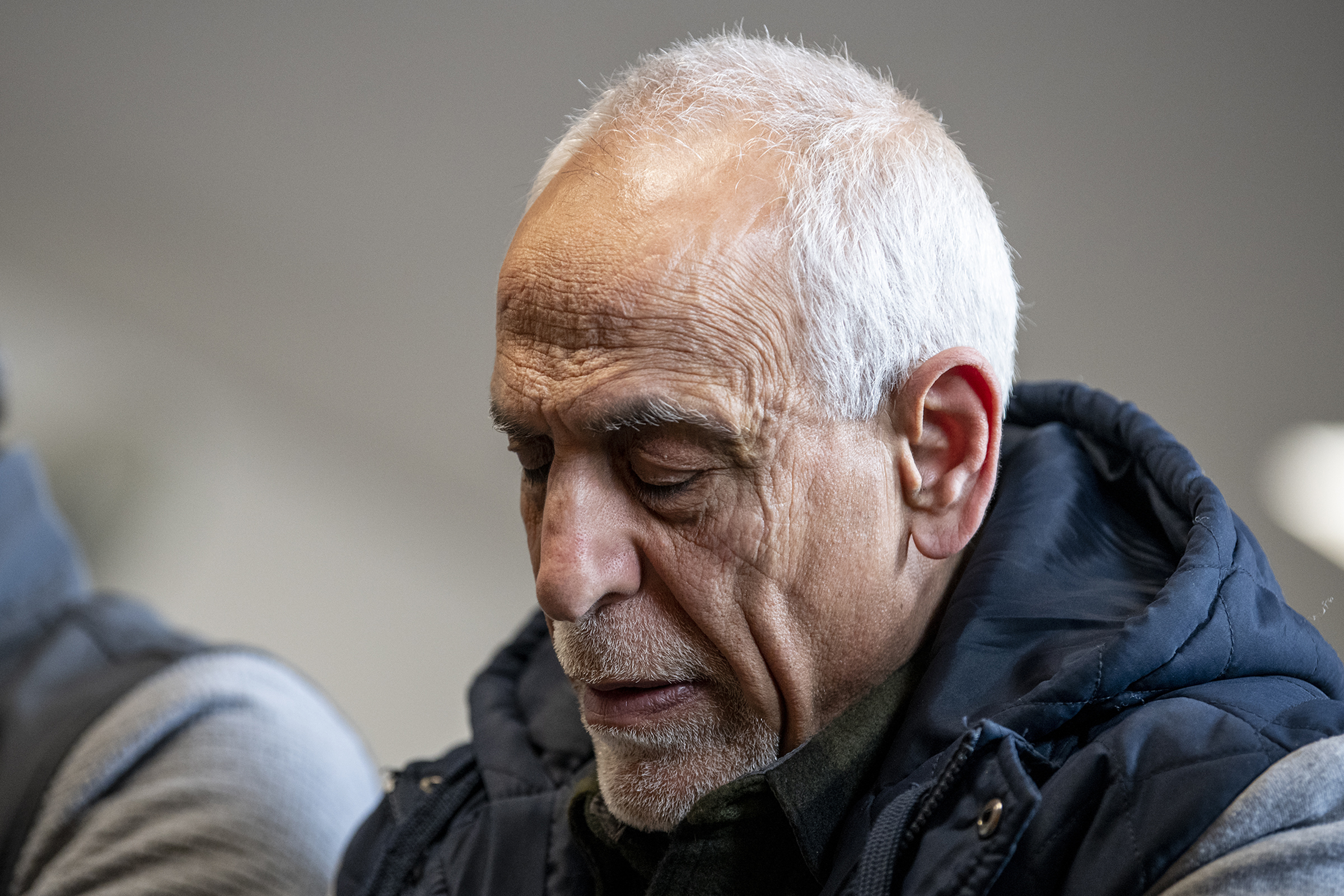
 Ibrahim Hamide prays during the midday prayer, Salat al-dhuhr. There are five daily prayers in Islam: Salat al-fajr, Salat al-dhuhr, Salat al-‘asr, Salat al-maghrib and Salat al-‘isha. Each prayer takes place at different times throughout the day in
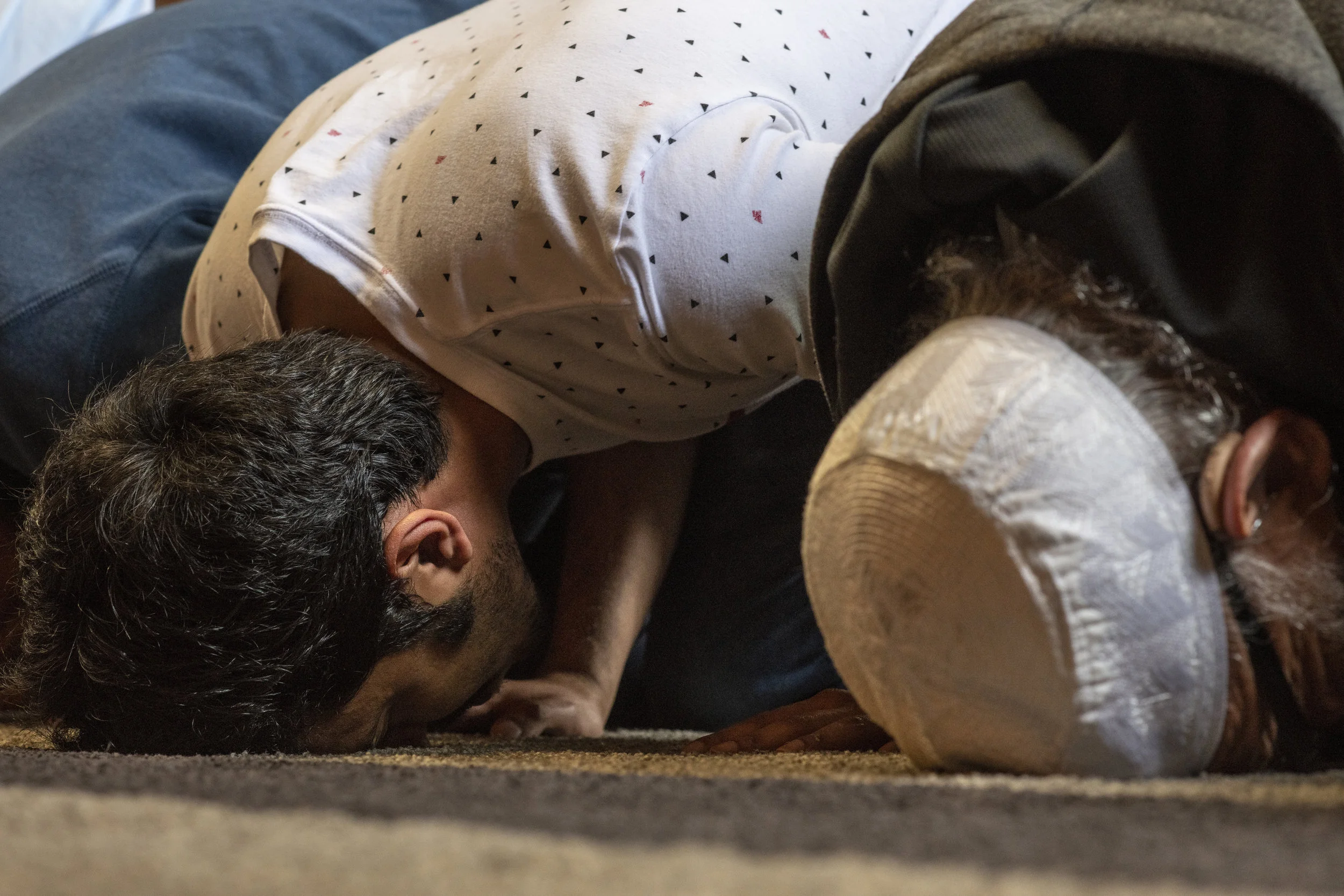
 Muhamad Elsherif prays at the Eugene Islamic Center during Friday prayer. Elsherif wears a skullcap known as a taqiyah. The taqiyah is commonly worn by Muslims in order to emulate the founder of Islam The Prophet Muhammad. A taqiyah is traditionally
 Badr Alsultan, left, and Elsherif, right, bow during prayer at the Eugene Islamic Center. Muslims place their foreheads on the ground during prayer in order to demonstrate prostration and faith in Allah, the sole god in Islam.
 Worshipers and guests are expected to wear modest clothing when entering a mosque. Anything beyond pants and T-shirts, such as shorts or tank tops, are viewed as disrespectful to wear inside a Mosque. Women wear a hijab or other traditional clothing
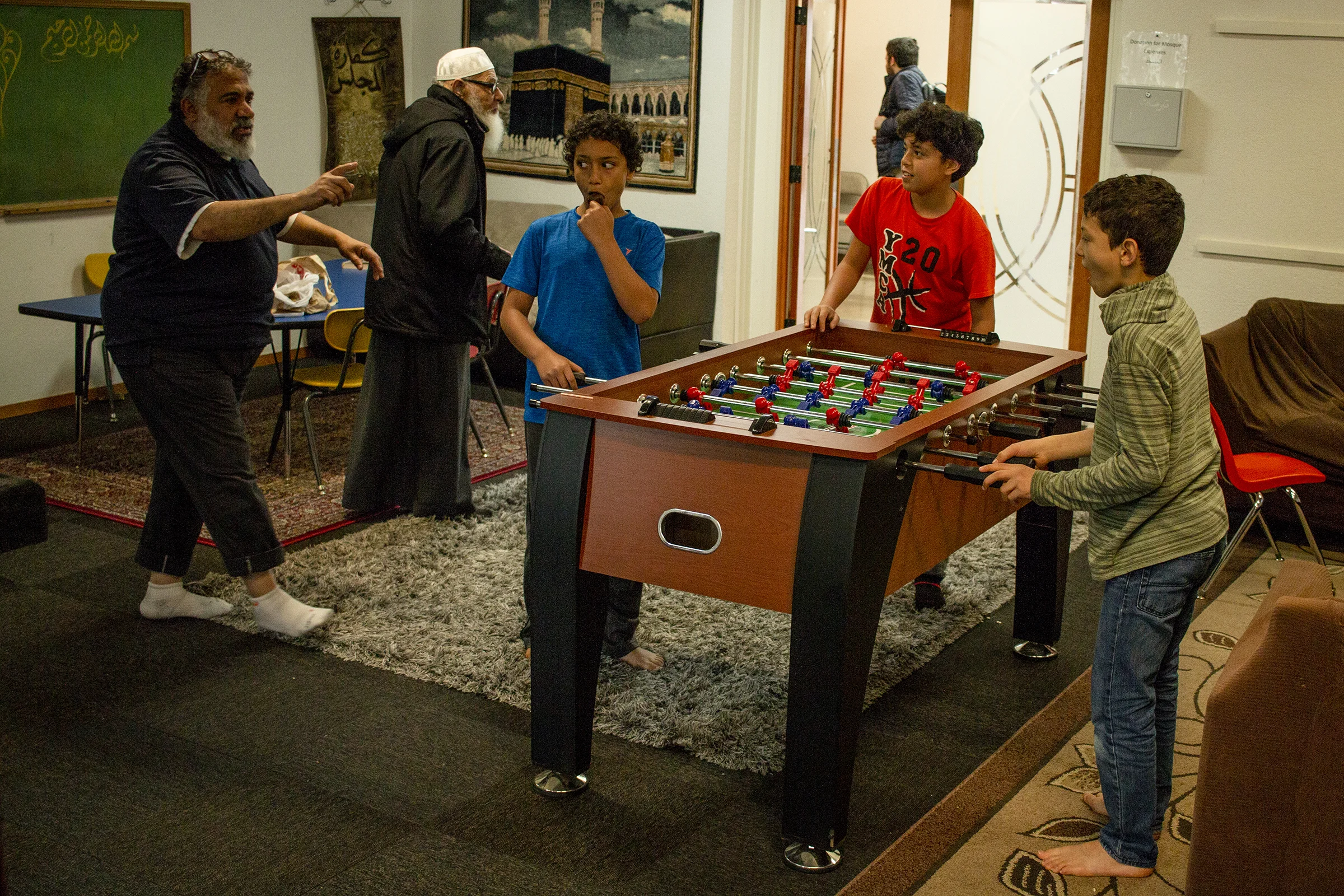
 The Eugene Islamic Center has a foosball table in the main lobby of the building. Children who come to the Mosque play at the foosball table in-between prayers. In Islam, children typically do not practice Salat, the five daily prayers, until they r
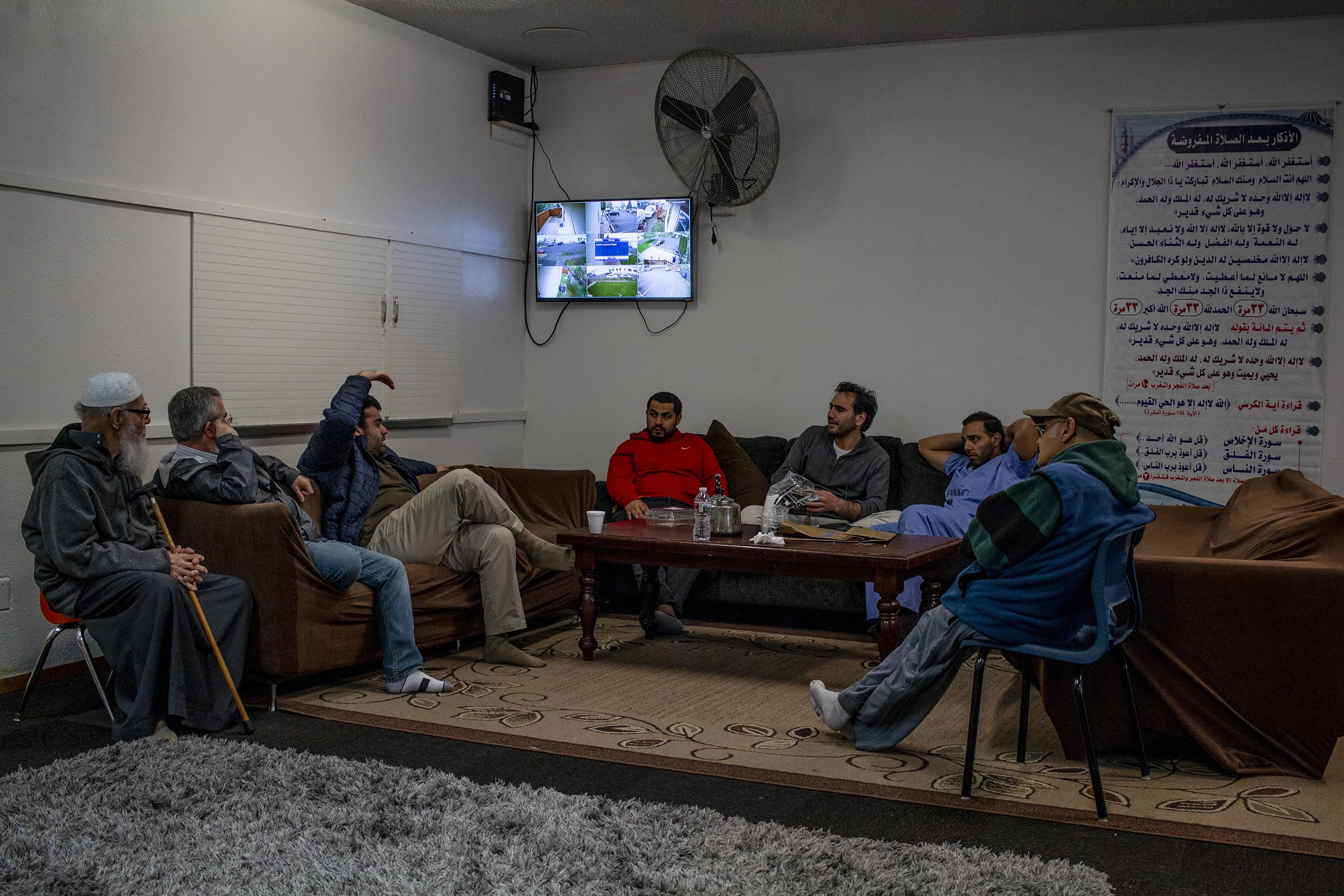
 Worshipers at the Eugene Islamic Center talk after finishing the midday prayer. The mosque is a place of worship and a general gathering place for the Muslim community of Eugene.
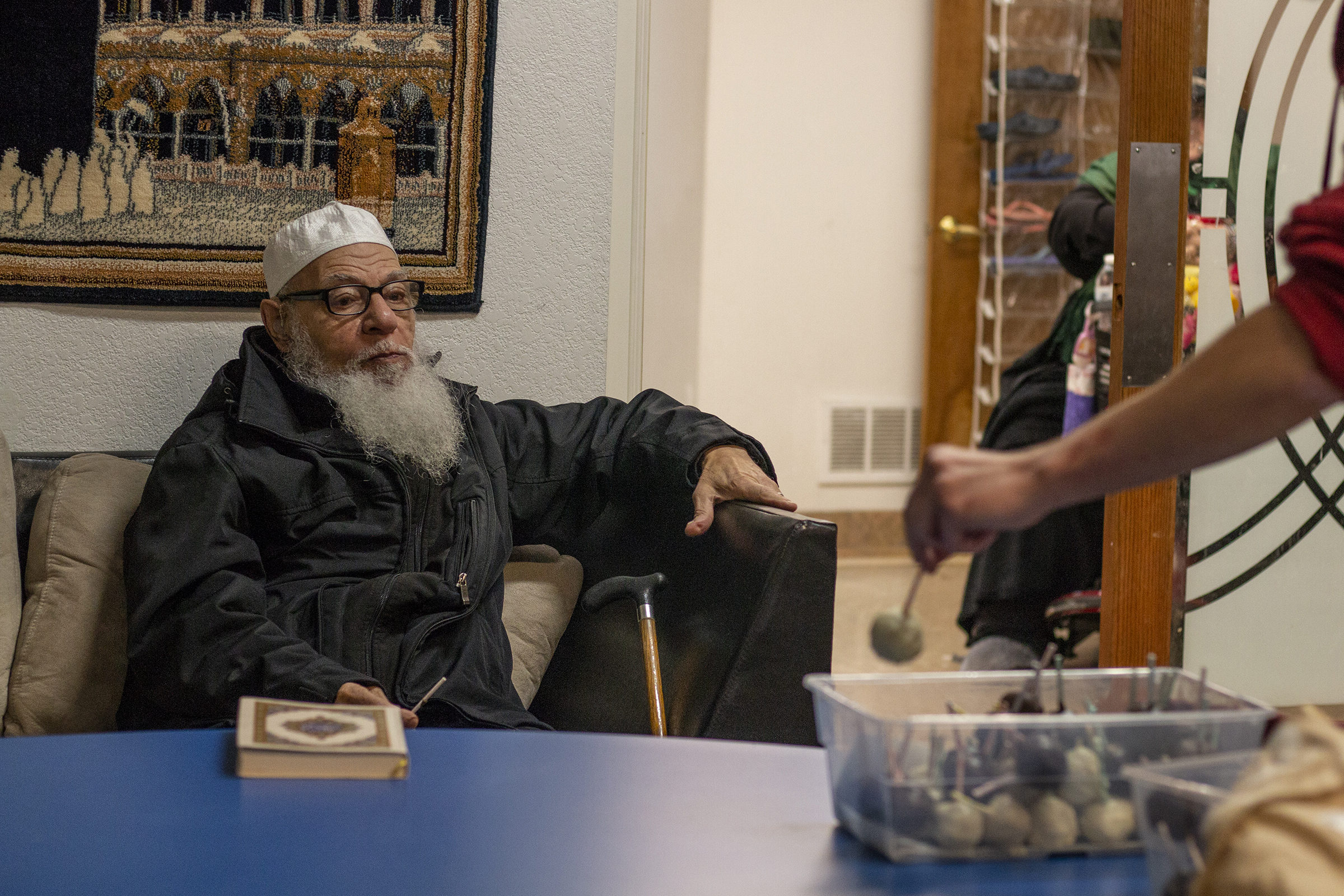
 Elsherif eyes a cake pop after eating one of the freshly baked desserts. Community members of the Eugene Islamic Center commonly bring food in for snacks after prayer.
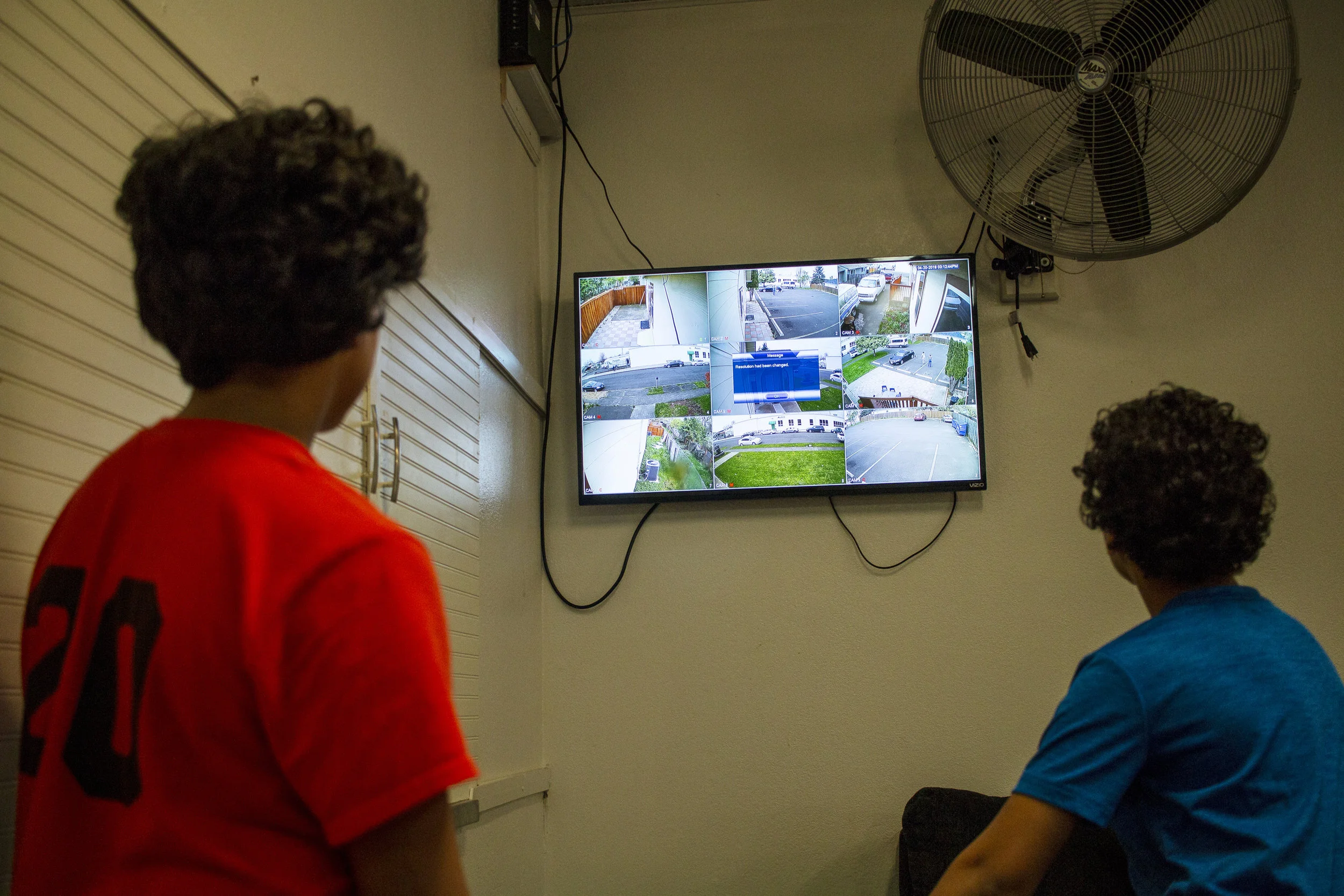
 Hasan Eissa, left, and Belal Eissa, right, watch a flat-screen television connected to the security cameras setup around the Eugene Islamic Center. A security camera system was purchased for the mosque after a Eugene resident, Chad Russel, came to t
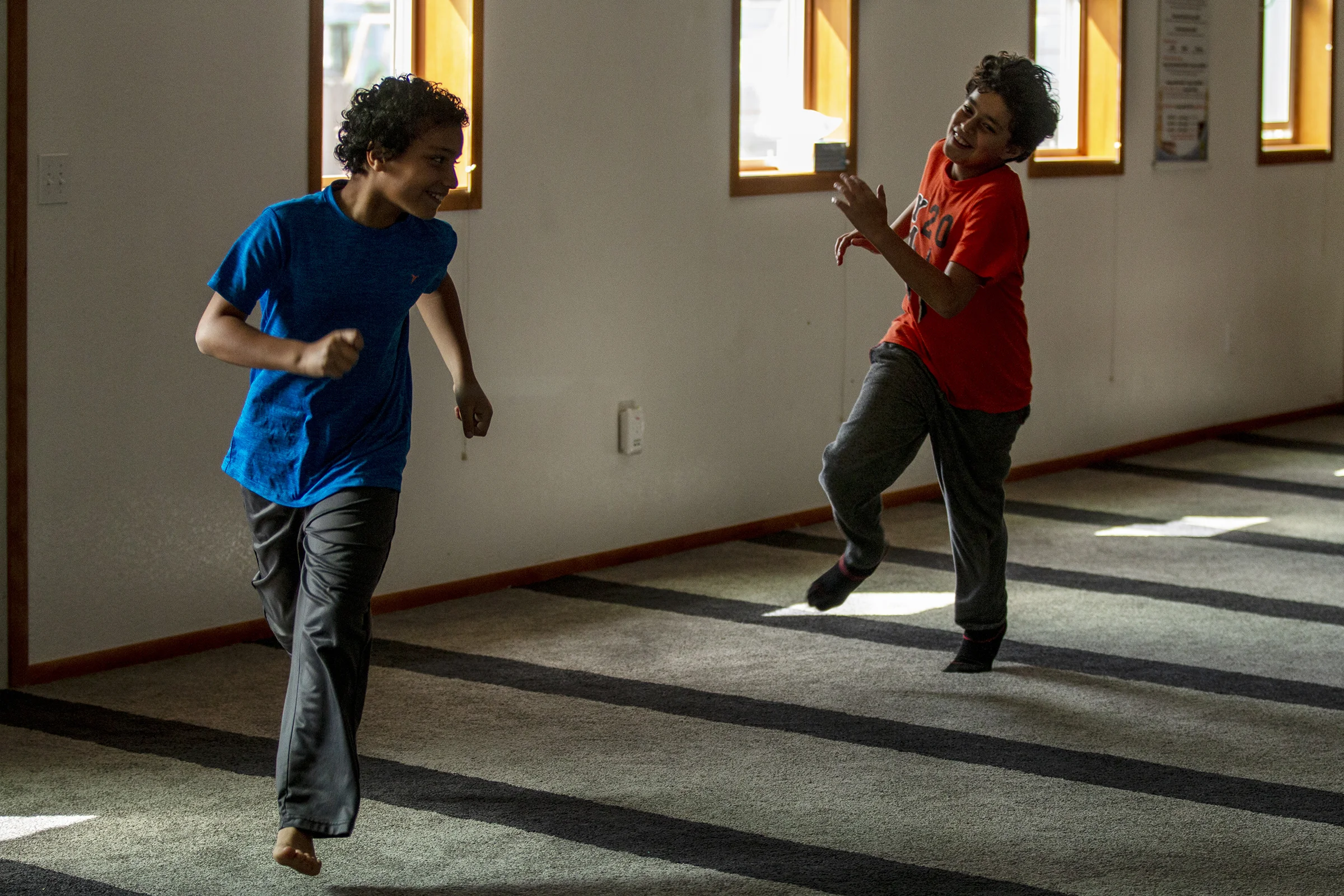
 Hasan Eissa, right, and Belal Eissa play tag in the mosque’s prayer room. After prayer has been completed, children are welcome to play unhindered while they wait for their parents to take them home.
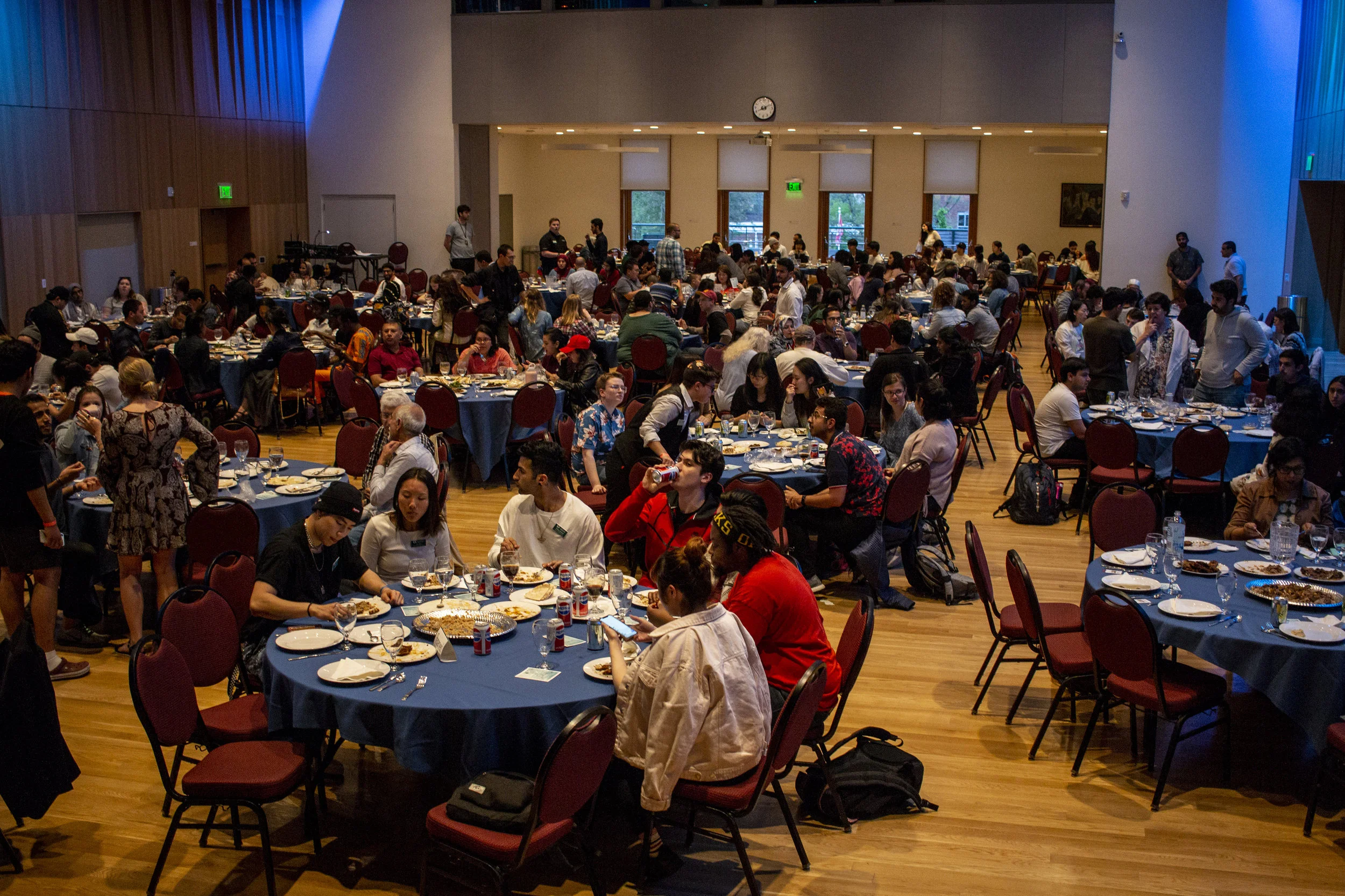
 At the University of Oregon, several events are held by Arab and Muslim student groups throughout the school year. One annual event, Arabian Night, attracts hundreds of attendees every year.
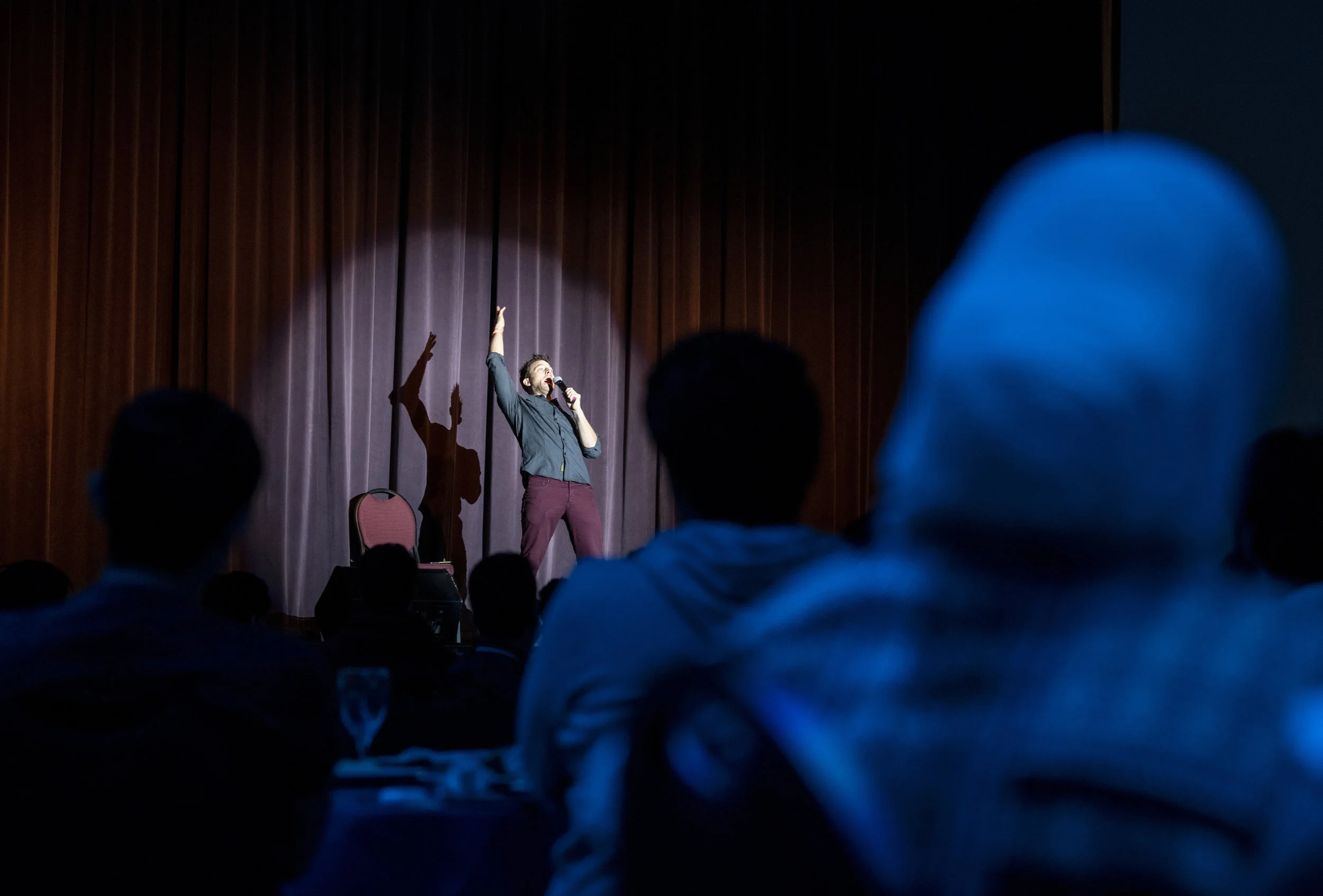
 Iranian American comedian Kevan “K-von” Moezzi performs during the 2018 Arabian Night at the University of Oregon. Moezzi is a stand-up comedian who specializes in shows focusing on Middle Eastern culture and religion.
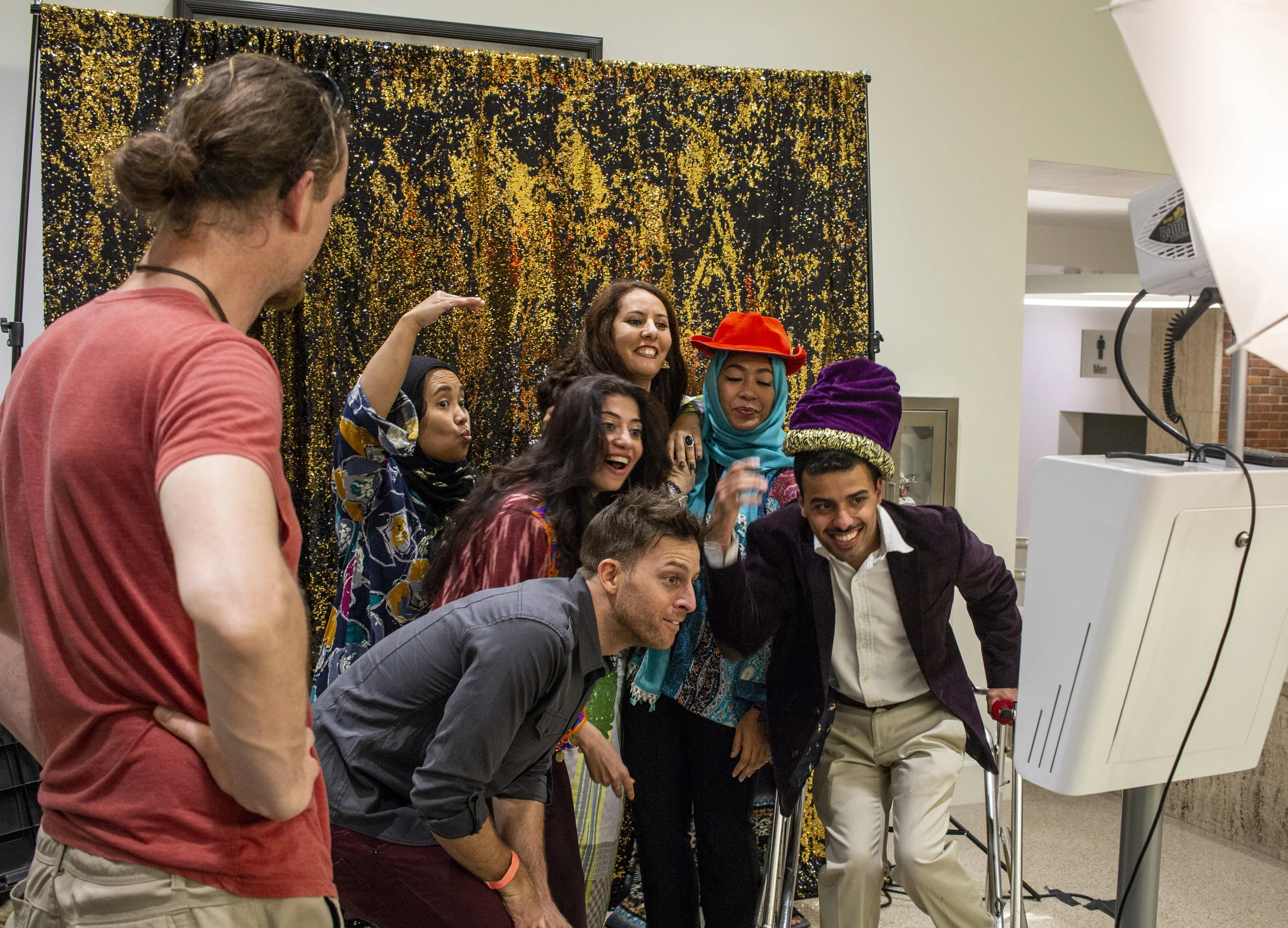
 Attendees of Arabian Night pose for a photo with Moezzi after his comedy show concluded.
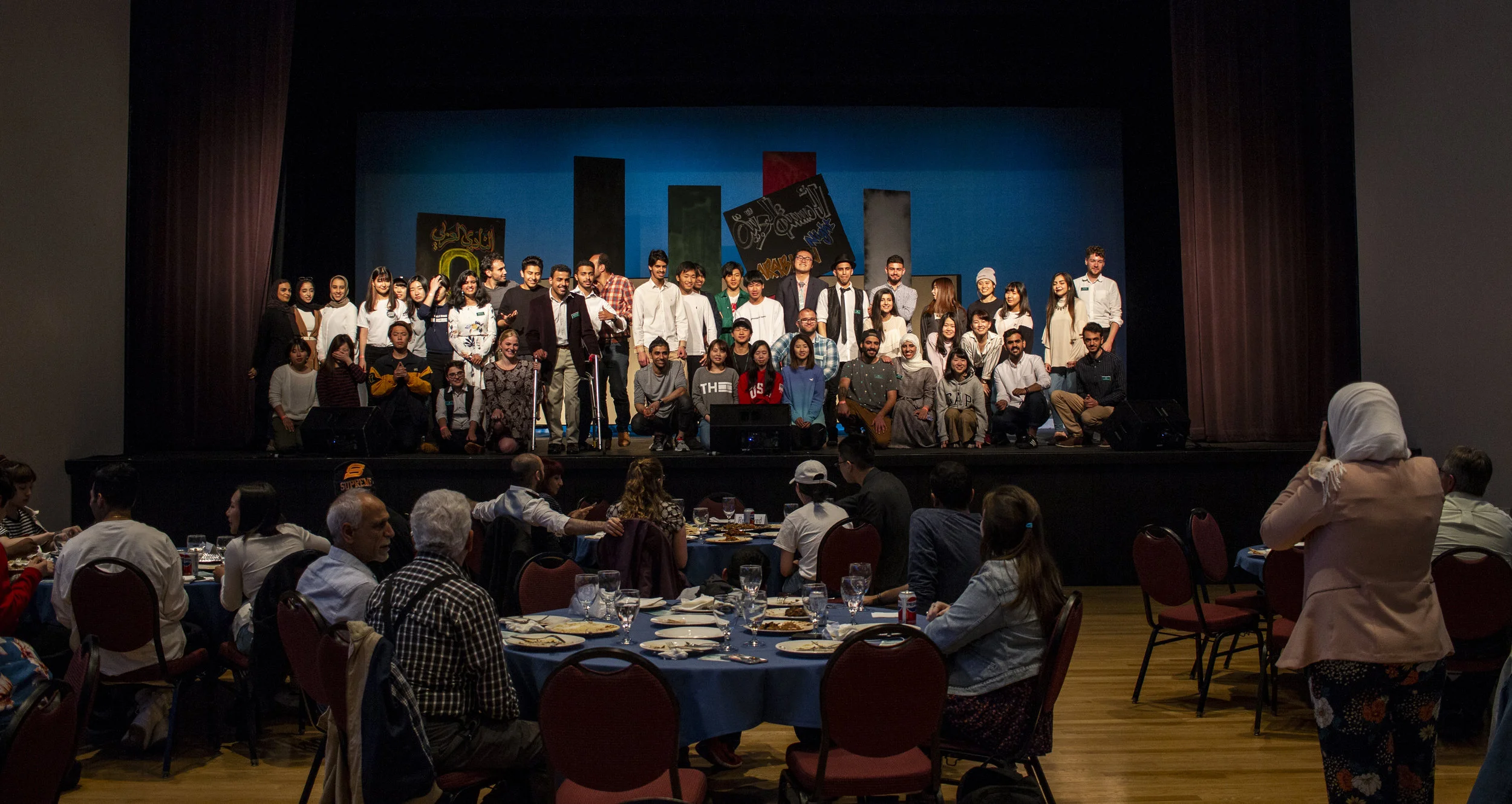
 After Arabian Night concluded, everyone who helped run the event posed on stage for a final group-photo. Members of the Arab Student Union, Muslim Student Association and Saudi Student Association attended and assisted in hosting the event that nigh
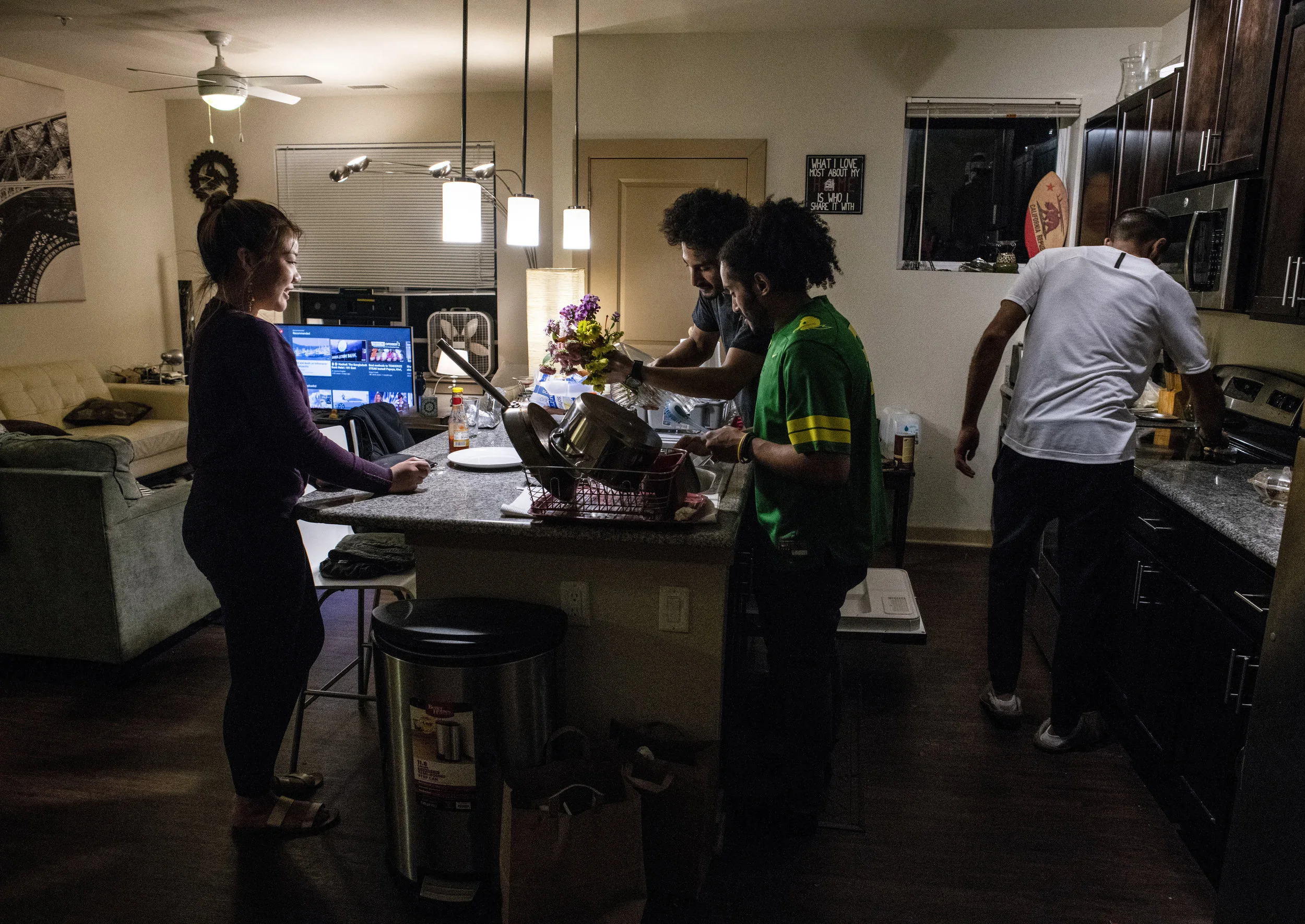
 From left to right, Luna Tamimi, Abdulrahman Alarfas, Anas Babaeer and Aziz Ebinghannam gather to make dinner after fasting for Ramadan. Ramadan is a holy month in Islam when practicing Muslims fast from sunrise to sunset.
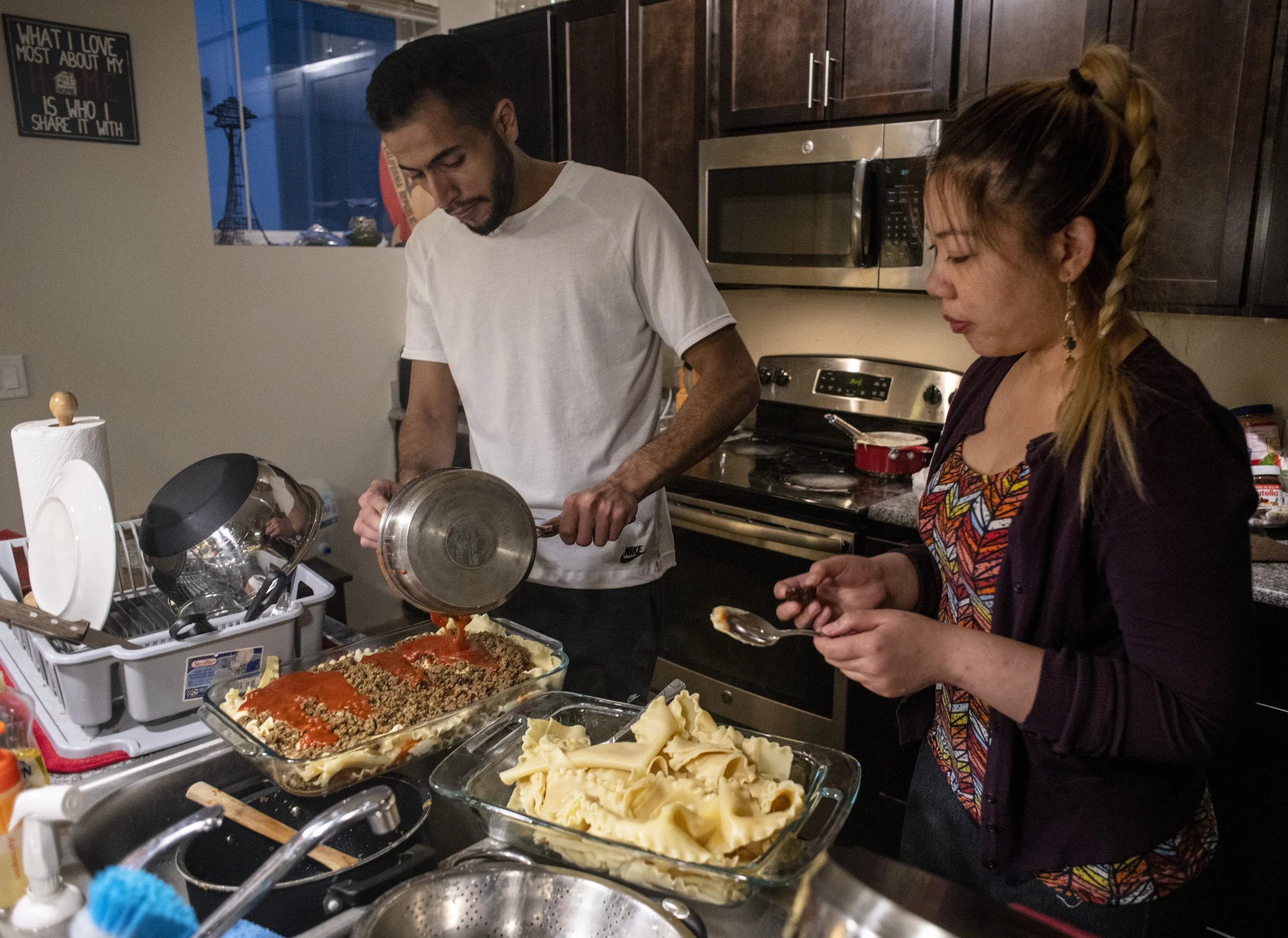
 Ebinghannam and Tamimi prepare lasagna for dinner at Ebinghannam’s apartment. Tamimi and Ebinghannam are both students at the University of Oregon.
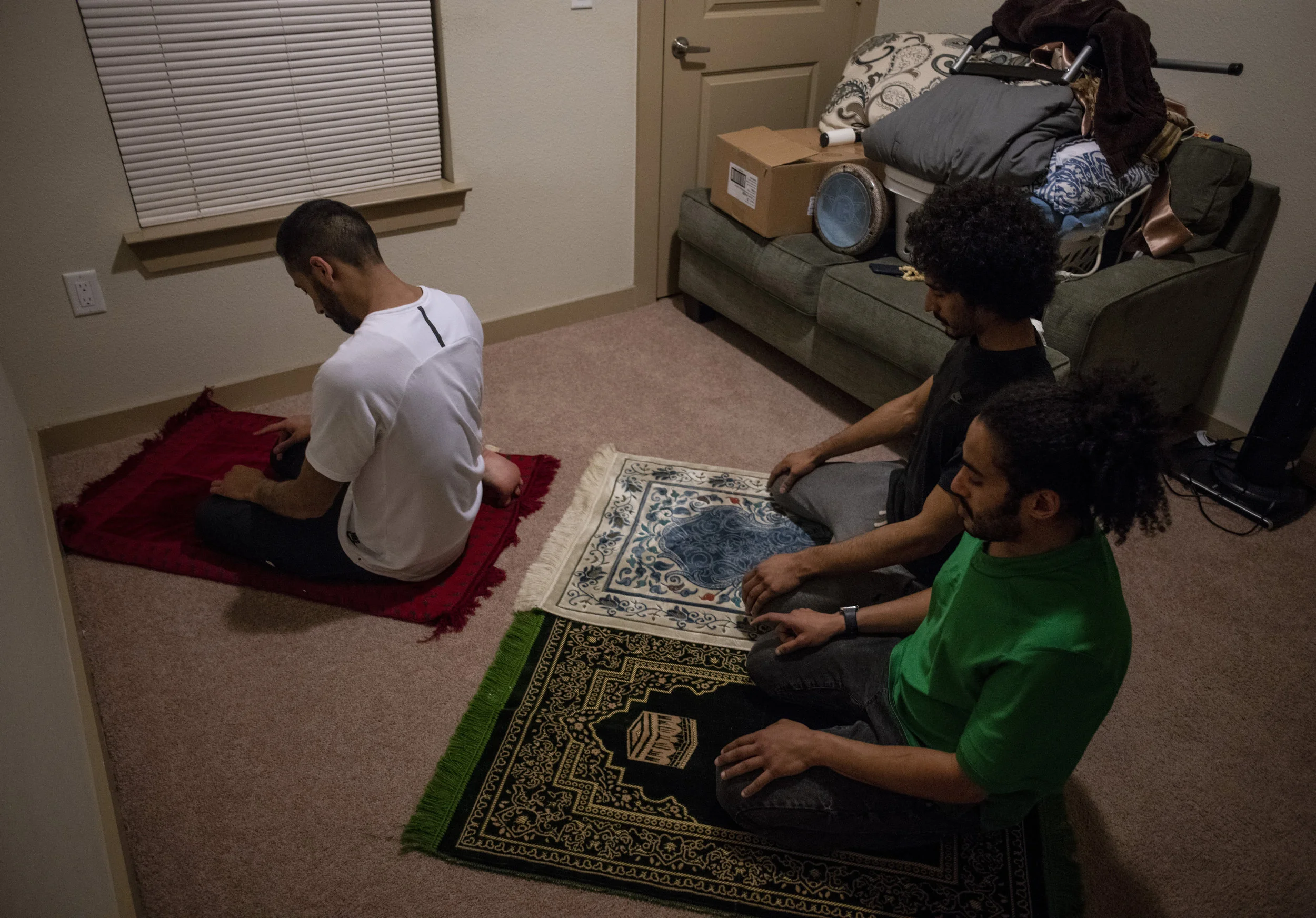
 Babaeer, Ebinghannam and Alarfas praying before they break their Ramadan fast for the day. Babaeer, Ebinghannam and Alarfas all live together and have a dedicated room in their apartment for prayer.
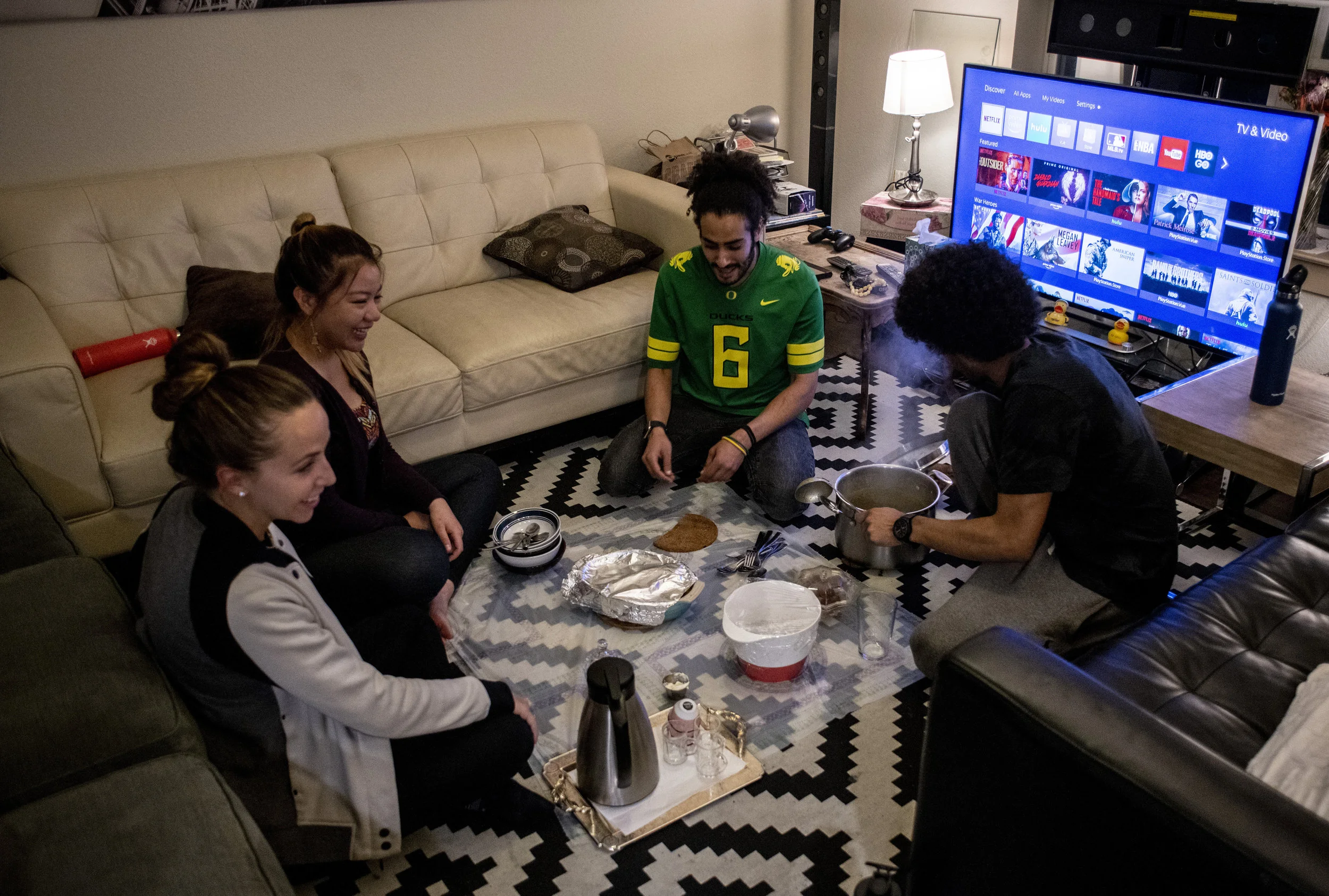
 The evening dinner held after a day of fasting during Ramadan is called Iftar. In Muslim culture, it is common practice to invite friends and family over for Iftar whether they have been fasting or not. Based on teachings in the Qur’an – the central
prev / next